Distributor, Importer or End User? Define the Right Chinese Buyer Profile
Define the commercial role, application, channel, region and evidence of fit before a long Chinese company list wastes outreach effort.
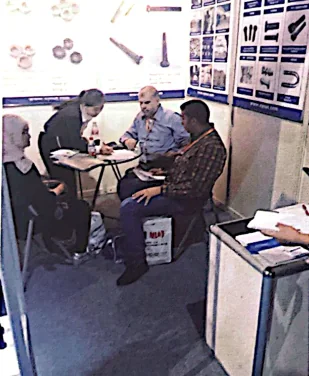
A company may import products, distribute them, use them in production and sell its own brand at the same time. Its legal name or website headline does not automatically reveal who makes the purchasing decision or whether a new overseas supplier is relevant. A buyer profile gives market research a clear inclusion rule.
Distributor, importer and end user are not interchangeable
| Commercial role | What it may do | Questions to test |
|---|---|---|
| Importer of record | Handles the formal import transaction and may also distribute or use the goods | Does it import this category, and for its own account or another party? |
| Distributor or wholesaler | Stocks and resells through regional, industry or dealer channels | Which territory, customers, brands and service responsibilities does it cover? |
| Trading company | Matches supply and demand and may coordinate transactions without being the end user | What value does it add, and who owns the buyer relationship? |
| Sales agent or representative | Develops business and introductions, often without buying inventory | How is authority, exclusivity, territory and commission defined? |
| Retailer or e-commerce seller | Sells to consumers or small business buyers through stores or platforms | What price band, volume, promotion and fulfilment model apply? |
| Brand or OEM customer | May buy components, finished goods or private-label production | Does your product fit its range, quality level and development process? |
| Industrial end user | Uses the product in operations, equipment or manufacturing | Who specifies, approves, purchases and services the product? |
The International Trade Administration describes several routes into China, including distributors, agents, trading companies and e-commerce. The right route varies by industry and region. Therefore, “find Chinese customers” should be converted into a more precise commercial role before research starts.
Build a buyer profile that a researcher can apply consistently
Minimum profile fields
- Commercial role: the role the company must play in the intended transaction.
- Product and application fit: the category, specification, use case or customer problem that must match.
- Channel and region: industry cluster, province, dealer network, online channel or national coverage required.
- Scale indicators: relevant product depth, locations, customers, production, public activity or other observable signals.
- Public evidence: website, product catalogue, trade-show presence, official profile or other source supporting the match.
- Contact path: a public business channel and, where available, a relevant function or department.
- Exclusions: mismatched product, geography, business model, language, price band or obvious conflict.
This profile prevents two common errors: counting a company merely because a keyword appears on its website, and excluding a useful company because its English description is incomplete. Search terms should include the language and business structure used locally, while the final inclusion decision should still be evidence-based.
Separate a researched lead from a qualified opportunity
| Stage | What is known | What must not be claimed |
|---|---|---|
| Researched lead | Public evidence suggests the company matches the agreed profile | It has not yet confirmed need, authority, budget or timing |
| Contacted company | An agreed message was sent or a business conversation was attempted | A message sent is not a response or expression of interest |
| Qualified conversation | The company has confirmed relevant facts or asked to continue | Interest is not an order, contract or payment commitment |
| Commercial opportunity | Parties are discussing product, terms, evaluation or next steps | Outcome still depends on due diligence, terms and both parties’ decisions |
Reporting these stages honestly makes outreach more useful. It also lets the client decide whether to adjust the buyer profile, improve the offer, provide Chinese-language materials or continue with a narrower group.
What China-side contact can—and cannot—confirm
A China-based coordinator can help search Chinese-language sources, call public business numbers, explain the project in locally understandable terms, arrange a video discussion and record practical feedback. Local contact can reveal whether a listed number works, whether the company handles the category and which questions still need the client.
It cannot guarantee that the person has purchasing authority, that all statements are accurate or that a company will respond or buy. Material claims should be checked through suitable due diligence, documentation and direct commercial discussion before reliance.
CHAOSHUO agrees the number of companies, screening depth, outreach activity, schedule and agency fee for each project. Start with a practical product-market assessment, then review why online search is only the beginning of China market research.
Official references
- U.S. International Trade Administration: China distribution and sales channels
- U.S. International Trade Administration: China market entry strategy
- U.S. International Trade Administration: selling factors and techniques
General commercial information, not proof that a named company is qualified, interested or safe to transact with. Business identity, authority, compliance and commercial terms require project-specific verification.
Turn a broad question into a clear research brief.
Tell us about your product and target customer. We will discuss the research, contact work, timing and fee before the project begins.